
The Secret To Humanize ANY B2B or AI Brand
Why Story + Style + Strategy = Sales.
You can buy the booth.
You can buy the stage.
You can buy the 60k logo spot behind the keynote.
If what you say still sounds like a robot wrote it after a long nap, none of it matters.
C-suite and enterprise buyers are numb.
They are drowning in content, especially in AI branding and “AI-enabled platforms” land.
A thousand white papers.
A thousand ebooks.
A thousand “thought leadership” LinkedIn posts that all read like they escaped from the same flavorless content farm.
You feel it.
They definitely feel it.
The problem is not effort.
The problem is what you stand for, and how you tell it.
In other words, your B2B brand.
This is where most teams get it completely backwards.
---
When I say "brand," most teams picture a mood board.
Logo, color palette, new website, cool gradient, slick product videos with synth music and stock footage of people pointing at glass walls.
That is not your B2B brand.
That is wardrobe.
Your brand is the narrative, the positioning, the ethos.
It is the story that sets you apart from Competitor A, B, and C who all say they have “end-to-end AI solutions that accelerate digital transformation.”
If your description could live on their website with a quick copy paste, you do not have a brand.
You have jargon.
Your B2B brand strategy should answer a much more human question:
What story are you inviting your buyers into?
Not “What features do we have?”
Not “What quadrant are we in?”
Not “What does our new tagline say?”
What story.
Think of it like this recipe:
Story first. Style second. Strategy third. In that order.
Buthere is the pattern I see over and over.
Tech company decides they need to “refresh the brand.”
Step one, they jump straight into style.
New logo.
New color palette.
New website template with diagonal sections and some 3D blobs to prove they are modern.
Then they try to retrofit a story around that.
Then they bolt on a go-to-market strategy at the end.
Result, everything feels disconnected.
Marketing says one thing.
Sales decks say another.
Product UI says a third thing that sounds like engineering wrote it at 1 a.m.
Almost nobody starts where they should.
With the story.
If you sell AI-enabled services or platforms, this is even more brutal.
Because your category already sounds like copy-paste noise.
Everyone says intelligence.
Everyone says transformation.
Everyone says future-ready.
So when you start with style, you just decorate the same empty words.
Flip it.
1. Story
2. Style
3. Strategy
In that order. Every time.
What a real B2B brand story looks like
Let’s make this practical.
A real B2B brand story does at least three things:
Invites your ICP onto a narrative where THEY get to change.
Names the villain holding them back.
Portrays you as the GUIDE who helps them win and take down the villain. They get to be the hero, not you!
You are not the protagonist.
Your C-suite buyer is.
Your narrative might sound like:
“Our brand exists for CFOs who feel trapped between growth pressure and risk fatigue. The world tells them to cut. We help them reframe. They become the leader who funds smarter bets with real-time AI insight, not another cost-cutter who slows the business.” Or whatever.
That is a story.
A clear invitation.
From there, you build everything else.
Your messaging.
Your positioning.
Your product naming.
Your scripts for sales.
Now when you step on stage, you do not talk about “our AI platform.”
You talk about that CFO and the tension they live in.
That is how you humanize any b2b tech or Ai brand.
Style should amplify your story, not distract from it.
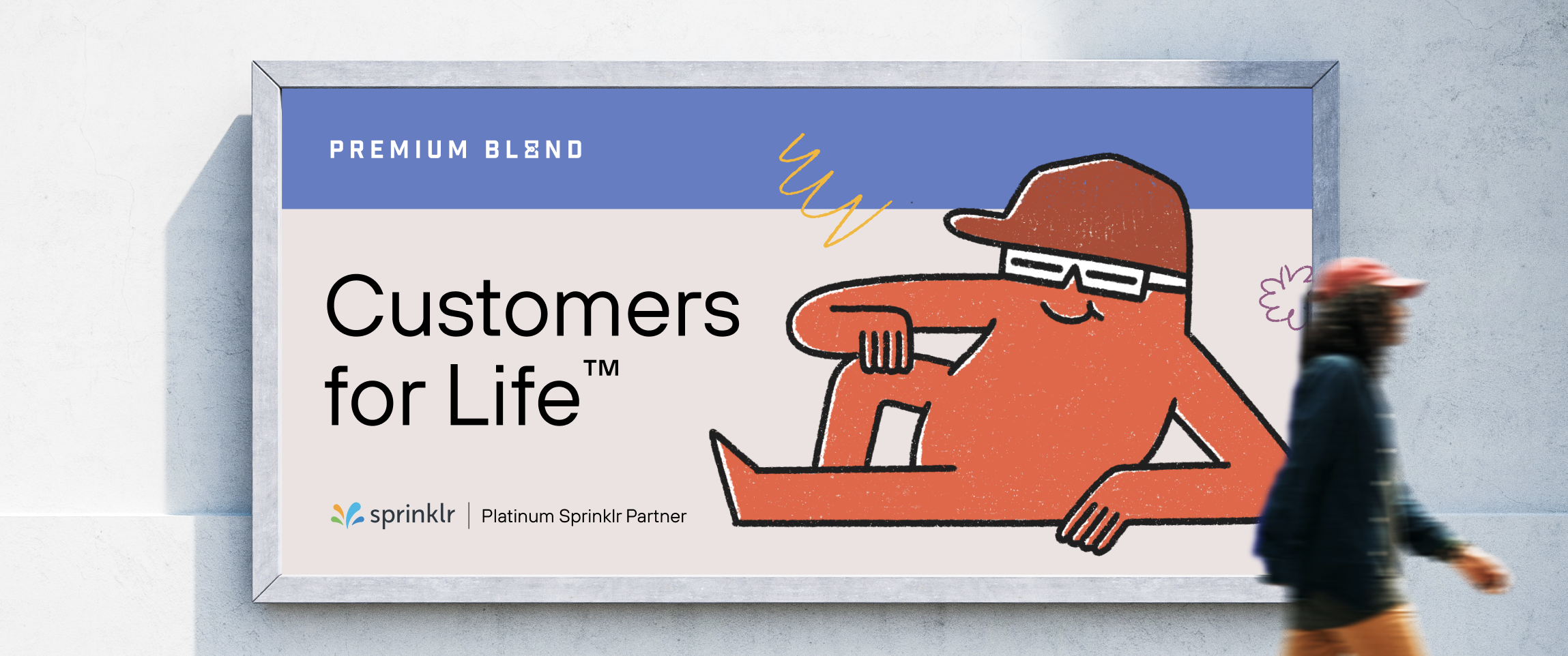
Positioning work for Premium Blend, a top partner in the Sprinklr® ecosystem
Once you own a story that actually feels different from your competitors, style finally has a job.
Your visual identity, your website, your decks, your event presence, they become delivery systems for the story.
If your narrative is sharp and human, but your design looks like “generic B2B SaaS template number 47,” you create dissonance.
If your story is about courage and change, but your visuals feel safe and corporate, you send mixed signals.
So ask one ruthless question about your style:
“Does the visual narrative match our brand’s value and positioning?”
If the answer is no, you are still renting aesthetics from the category.
You still blend in.
Your style should:
- Carry your narrative in every frame and layout
- Help buyers feel the emotion you stand in
- Signal what you value, not just what you sell
That is how visual identity becomes a real B2B branding tool, not just decoration.
---
Your go-to-market is the proof, not the afterthought

Here is where most teams fall apart.
They treat go-to-market as a separate workstream from brand.
Brand over here.
GTM over there.
Two decks, two owners, two worlds.
So the story lives in a brand book.
The style lives in Figma.
The strategy lives in a spreadsheet.
Your buyer experiences none of that.
They experience the gap.
Your go-to-market strategy should connect story and style into one coherent motion.
Every touchpoint should answer:
- Does this reinforce the story we chose?
- Does this look and feel like our style, not the category default?
- Does this help our buyer see themselves more clearly in the story?
Outreach scripts.
Case studies.
Conference talks.
Product tours.
If they all pull from the same narrative, you stop sounding random.
You stop playing volume games.
You build memory.
You build association.
You build a real B2B brand.
Humanizing AI branding in a sea of “techy tech”

Right now, AI branding might be the most copy-pasted field on earth.
Everyone says responsible.
Everyone says trusted.
Everyone says secure.
Everyone waves some version of “we put humans first,” then ships a website that reads like a data sheet.
You want to humanize your marketing.
You want to humanize your AI-enabled offerings.
Start with how you talk about yourself.
If your B2B brand still leads with “AI-powered platform that optimizes X at scale,” you already lost.
You sound like everyone else.
Instead:
- Talk about the human tension your buyers sit in
- Talk about the tradeoffs they make when they choose you
- Talk about the outcomes in language a board member’s spouse would understand
Strip out jargon until what is left feels almost too simple.
That is usually where the truth lives.
When you humanize your brand like that, everything else changes.
Marketing stops sounding like a buzzword bingo card.
Sales conversations shift from “demo the features” to “coach the buyer through the story.”
Even your product decisions get cleaner because you know what narrative you build toward.
The humanity starts at the brand, not at the last-mile content piece.
---
The buyers are not the problem.
The messaging is.
Here is the myth we like to tell ourselves.
“The C-suite just does not read.”
“The enterprise buyers do not have time.”
“They only care about ROI and features.”
No.
They read novels on vacation.
They binge shows with complex characters.
They listen to podcasts for hours.
They will give their attention to what feels worth it.
They just refuse to wade through another 20-page PDF about “accelerating digital transformation through AI-powered insights.”
If you want their attention, treat them like humans, not personas.
Speak plainly.
Own a point of view.
Tell them where you stand in the mess.
That is brand.
That is strategy.
That is what separates you from the AI noise.
Your Chief Creative Officer,
BT
#humanitysells #b2btech #b2bmarketing #aimarketing #aibranding
